In 2025, Congress restored 100% bonus depreciation. For real estate investors, this legislative update means immediate tax savings that can exceed hundreds of thousands of dollars on qualifying properties.
The One Big Beautiful Bill Act reverses the scheduled phase-down that would have limited bonus depreciation to just 40% in 2025. Properties acquired and placed in service after January 19, 2025, now qualify for the full 100% first-year deduction on eligible components. This change fundamentally alters the tax planning landscape for 2025 and beyond.
This guide breaks down bonus depreciation basics for real estate investors at every level. You'll learn the current rules, qualifying property types, and specific strategies to maximize your deduction.
We'll demonstrate real-world tax savings through concrete examples and answer the critical questions investors need to navigate this powerful tax benefit. Whether you're acquiring your first rental property or expanding an existing portfolio, understanding bonus depreciation is essential to optimizing your investment returns.
What Is Bonus Depreciation? Understanding the Basics
Bonus depreciation allows taxpayers to deduct a specified percentage of qualifying property costs in the year placed in service. Instead of spreading depreciation over 5, 7, or 15 years, you claim the deduction immediately. This accelerated depreciation directly reduces your current year tax liability.
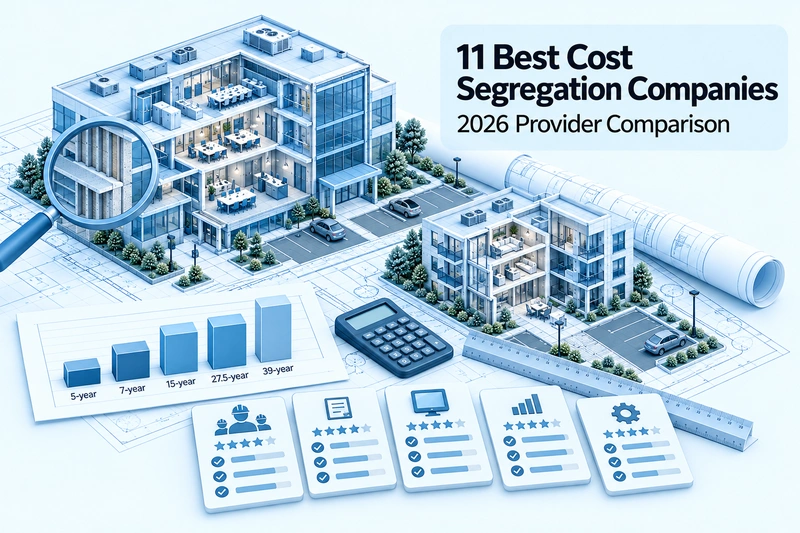
For real estate investors, bonus depreciation works powerfully when combined with cost segregation. While building structures depreciate over 27.5 or 39 years, cost segregation identifies personal property and land improvements within your building that qualify for accelerated depreciation. These components become eligible for bonus depreciation.
Key Benefits:
- Immediate tax deduction on qualified property
- No annual limit on bonus depreciation claimed
- Full deduction allowed for Alternative Minimum Tax purposes
- Applies to both new and used property
What's the difference between bonus depreciation and regular depreciation?
Regular depreciation spreads deductions across the property's useful life. A 5-year asset generates 20% annual deductions. Bonus depreciation front-loads the entire deduction in year one. On a $100,000 qualifying asset, regular depreciation provides $20,000 in year one deductions. With 100% bonus depreciation, you deduct the full $100,000 immediately.
This acceleration transforms tax planning from a long-term strategy into immediate cash flow generation.
Current Bonus Depreciation Rules
The One Big Beautiful Bill fundamentally reshapes depreciation strategy. Properties acquired and placed in service after January 19, 2025, qualify for 100% bonus depreciation. Properties acquired before this date remain subject to the original phase-down schedule.
Current Rate Schedule:
| Acquisition Date | 2025 Rate | 2026 Rate |
|---|---|---|
| Before Jan 20, 2025 | 40% | 20% |
| After Jan 19, 2025 | 100% | 100% |
Qualifying Property Types:
- Personal property inside the building (appliances, fixtures, specialty systems, furniture)
- Land improvements (parking lots, landscaping, sidewalks, fencing)
- Commercial interior improvements (QIP)
- Water and utility infrastructure
Does used equipment qualify for bonus depreciation?
Yes. Used property qualifies if you're the first to use it in your business, you didn't previously own it, and it wasn't acquired from a related party. This expansion beyond new property creates opportunities for value-add investors purchasing existing properties.
R.E. Cost Seg identifies all bonus-eligible components through comprehensive property analysis, ensuring investors capture every available deduction under current regulations.
How Investors Save Big
Consider a $2,000,000 office building purchase in March 2025. After deducting land value of $400,000, the depreciable basis equals $1,600,000.
Cost Segregation + Bonus Depreciation Breakdown:
Without cost segregation: $1,600,000 ÷ 39 years = $41,026 first-year depreciation.
With cost segregation after site visits and engineering analysis:
- Building structure (39-year): $1,120,000 (standard depreciation)
- 5-year property (specialty lighting, movable partitions): $240,000
- 7-year property (furniture, equipment): $160,000
- 15-year property (parking lot, landscaping): $80,000
Tax Savings Calculation:
- Total bonus depreciation eligible: $480,000
- At 100% bonus rate: $480,000 first-year deduction
- Standard depreciation on structure: $28,718
- Total first-year depreciation: $508,718
- Tax savings at 37% bracket: $188,226 immediate cash benefit
Compare this to $15,180 in tax savings without cost segregation. The difference exceeds $173,000 in year one alone.
How does cost segregation affect my bonus depreciation?
Cost segregation transforms 30% of your building cost into accelerated depreciation opportunities. Components that would normally depreciate over 39 years become eligible for immediate deduction. This reclassification typically identifies 20-35% of building costs as personal property or land improvements qualifying for bonus depreciation.
Maximizing Your Tax Benefits: Strategic Considerations
Strategic timing and proper documentation determine your bonus depreciation success. Properties with binding contracts executed before January 20, 2025, use the old 40% rate. Delaying contract execution until after January 19 captures the full 100% benefit.
Key Strategies:
- Time acquisitions carefully: Contract date determines your rate, not closing date
- File Form 3115 for retroactive studies: Claim missed depreciation on properties already in service
- Understand recapture rules: Selling before recovery period ends triggers ordinary income
- Combine with 1031 exchanges: Defer both capital gains and recapture tax
Commonly Missed Eligible Items:
- Decorative lighting systems
- Specialized electrical for equipment
- Security systems and cameras
- Parking lot striping and signage
Can I claim bonus depreciation on residential rentals?
Yes. Residential rentals qualify for bonus depreciation on personal property and land improvements. Short-term rentals offer additional benefits, potentially avoiding passive loss limitations. Real Estate Professional Status further enhances these deductions by eliminating passive activity restrictions entirely for investors who qualify - meaning more than 750 hours per year in real property trades and more than half of all working hours in real property activities.
Taking Action on 100% Bonus Depreciation
The restoration of 100% bonus depreciation creates unprecedented tax savings opportunities for real estate investors. Properties acquired after January 19, 2025, can generate immediate deductions exceeding 30% of building costs when properly analyzed through cost segregation.
Discover your property's hidden tax deductions with a free preliminary analysis. Most investors recover their study cost through tax savings within months.