The One Big Beautiful Bill has reinstated 100% bonus depreciation for properties acquired after January 19, 2025. This legislative update creates unprecedented opportunities for real estate investors who understand how to combine bonus depreciation with 1031 exchanges.
These two tax strategies function as complementary forces in wealth building. A 1031 exchange defers capital gains taxes indefinitely. Bonus depreciation accelerates deductions on replacement properties. Together, they enable investors to preserve capital while maximizing current-year tax benefits.
Financial advisors who manage real estate portfolios recognize this strategic combination as essential for sophisticated tax planning. Investors can defer millions in capital gains while claiming hundreds of thousands in accelerated depreciation deductions. The result: improved cash flow, reduced tax liability, and accelerated wealth accumulation.
Understanding Each Partner in This Tax Strategy Marriage
Bonus Depreciation: The Income Reducer
The One Big Beautiful Bill Act has transformed the depreciation landscape. Properties acquired after January 19, 2025, qualify for 100% bonus depreciation. This marks a significant increase from the 40% rate applicable to properties acquired before January 20, 2025.
Qualifying property includes:
- MACRS property with recovery periods of 20 years or less
- Water utility property
- Qualified improvement property
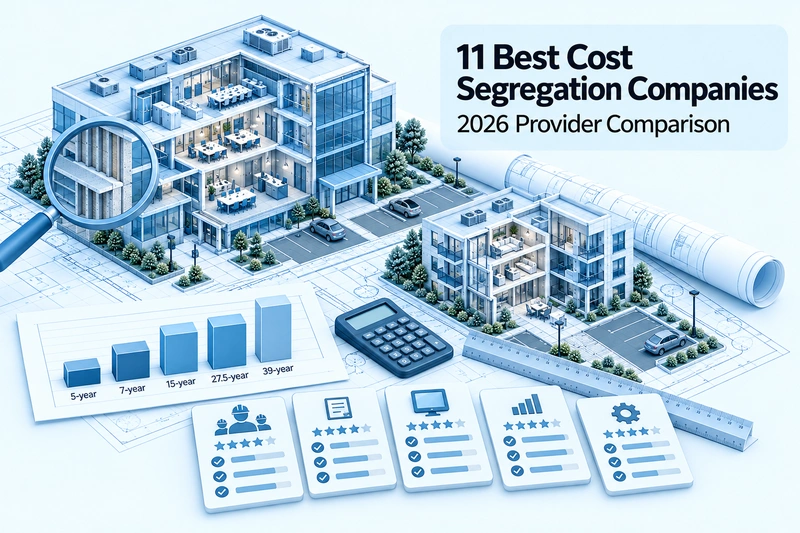
R.E. Cost Seg identifies these components through detailed engineering studies, separating 5, 7, and 15-year property from 27.5 or 39-year building structures. This reclassification typically moves 25-30% of a building's depreciable basis into accelerated categories.
1031 Exchange: The Gain Deferrer
Section 1031 exchanges allow investors to defer capital gains taxes when selling investment property. By reinvesting proceeds into like-kind property, investors preserve capital for future investments. The carryover basis from the relinquished property transfers to the replacement property, maintaining the tax deferral benefit.
What happens to my depreciation if I acquired property before January 20, 2025? Properties acquired before January 20, 2025, still qualify for 40% bonus depreciation if placed in service in 2025. A certain long production period property qualifies for 60% bonus depreciation under the same timeline.
The Strategic Combination: A Financial Advisor's Playbook
The Synergy Effect
Combining 1031 exchanges with cost segregation services creates compounding tax benefits. The exchange preserves capital by deferring gains. Cost segregation on the replacement property accelerates depreciation deductions. This dual strategy maximizes both immediate and long-term tax savings.
Consider this scenario: An investor sells a $3 million property with a $1 million basis. Through a 1031 exchange, they defer $2 million in capital gains. On the replacement property, cost segregation identifies 30% of the building's value for accelerated depreciation. Excluding land value, this generates over $50,000 in additional first-year depreciation deductions.
Financial Advisor's Strategic Insights
Professional wealth managers view these tools as essential components of comprehensive tax planning. The timing of each strategy matters. Advisors recommend initiating cost segregation studies immediately after property acquisition to maximize bonus depreciation benefits in the acquisition year.
Portfolio-wide planning reveals additional opportunities. Investors with Real Estate Professional Status can offset ordinary income with passive losses from depreciation if they work more than 750 hours per year in real property trades and more than half of all working hours in real property activities. Those operating short-term rentals may qualify for similar benefits without meeting the 750-hour requirement.
Key Benefits of the Strategic Combination:
- Defer capital gains taxes indefinitely through strategic exchanges
- Accelerate depreciation on replacement properties worth millions
- Generate immediate cash flow from reduced tax obligations
- Reinvest tax savings into additional properties
- Build wealth through tax-efficient property upgrades
The current legislative environment makes this strategy particularly powerful. With permanent 100% bonus depreciation now available, investors can claim entire cost segregation allocations in year one.
Can I perform cost segregation on a property acquired through a 1031 exchange? Yes. Taxpayers can use cost segregation on replacement property acquired through Section 1031 exchanges. This proves especially beneficial when trading up in value, as the additional basis qualifies for accelerated depreciation.
Navigating Potential Pitfalls - The Recapture Reality
Understanding Depreciation Recapture
Depreciation recapture represents a critical consideration when combining 1031 exchanges with accelerated depreciation. Section 1245 property faces ordinary income recapture rates. Section 1250 property typically incurs lower recapture exposure. Understanding these distinctions prevents unexpected tax consequences.
Cost segregation reclassifies building components into Section 1245 property. These assets include 5-year and 7-year property identified during site visits. When selling properties without a 1031 exchange, investors must recapture this accelerated depreciation as ordinary income.
For example, an investor claims $85,000 in accelerated depreciation through cost segregation. Without a 1031 exchange, selling triggers ordinary income recapture on this amount. The solution: structure the exchange to acquire replacement property with equal or greater Section 1245 property. This preserves the tax deferral benefit.
Strategic property selection becomes essential. Replacement properties must contain sufficient personal property components to avoid immediate recapture. Properties with similar uses typically meet this requirement. Converting an office building to apartments may trigger partial recapture if personal property values decrease.
How does cost segregation affect recapture in future 1031 exchanges?
You must acquire replacement property with equal or greater amounts of Section 1245 property to avoid recapture. Work with qualified intermediaries who understand these requirements. Consider filing Form 3115 if changing depreciation methods on existing properties before the exchange.
Implementation Roadmap - From Strategy to Action
The Professional Team Approach
Successful implementation requires coordination among specialized professionals. CPAs ensure tax compliance and optimize filing strategies. Cost segregation engineers conduct detailed property analyses. Qualified intermediaries facilitate 1031 exchanges within IRS timelines. Financial advisors integrate these strategies into broader wealth management plans.
Implementation Checklist:
- Evaluate current property portfolio for exchange opportunities
- Commission cost segregation study on high-value properties
- Identify replacement properties with strong depreciation potential
- Coordinate timing with tax professionals for maximum benefit
- Document all transactions for IRS compliance
- File necessary forms, including potential Form 3115 for method changes
Properties generating significant income warrant immediate analysis. Multi-family buildings, retail centers, and industrial properties typically yield the highest cost segregation benefits. The combination strategy works particularly well for investors scaling their portfolios through strategic exchanges.
Maximizing Your Tax Strategy
The combination of 100% bonus depreciation and 1031 exchanges creates unparalleled tax advantages for real estate investors. The Big Beautiful Bill's permanent bonus depreciation provisions eliminate timing concerns that previously complicated tax planning. Investors can now execute long-term strategies with confidence.
Smart investors recognize this opportunity. They defer capital gains through exchanges while claiming immediate depreciation deductions on replacement properties. The cash flow improvement from reduced taxes funds additional investments, accelerating portfolio growth.
State conformity varies significantly. Verify your state's bonus depreciation rules before implementing these strategies. Some states fully conform to federal provisions. Others require adjustments that impact overall tax savings.
Calculate your potential savings with a complimentary cost segregation analysis. Discover how combining these strategies could save hundreds of thousands in taxes.