What if your short-term rental could generate six-figure tax savings in the first year, enough to fund another beachfront renovation before high season?
In one R.E. Cost Seg engagement involving a portfolio of luxury vacation rentals on Florida's Gulf Coast, our team reclassified roughly 30% of each property's depreciable basis through an engineering-based cost segregation study, producing first-year deductions in that range. Results vary materially by property, basis, and the owner's tax position; this case study is illustrative, not typical.
Short-term rentals are often loaded with fast-depreciating assets, furniture, appliances, smart-home systems, outdoor kitchens, decks, pools, and landscaping. But unless you break them out properly, much of that basis sits inside the long-life building bucket, 27.5 or 39 years depending on how the property is classified, even though those components clearly don't last that long.
Here's what matters: the IRS allows you to reclassify qualifying components into 5-, 7-, or 15-year MACRS categories. Instead of waiting decades to recover that portion of your investment, you can claim those deductions far sooner, and, for property meeting the One Big Beautiful Bill Act (OBBBA) acquisition and placed-in-service rules, deduct them entirely in year one through 100% bonus depreciation.
R.E. Cost Seg works with STR hosts, operators, and investors to surface that value. Across our STR engagements, engineering-based studies have typically reclassified somewhere in the 25%–35% range of a vacation rental's depreciable basis into shorter-life categories, though the actual percentage for any given property depends on its build quality, finishes, and improvements. We share that range to set expectations, not as a guarantee.
This article breaks down which short-term rental components qualify for accelerated depreciation, the rules that govern the deduction, and what the strategy actually means for an owner's bottom line.
Understanding Cost Segregation in the Context of Short-Term Rentals
At its core, cost segregation is an IRS-recognized method of accelerating depreciation. The IRS publishes a Cost Segregation Audit Techniques Guide (ATG) describing acceptable methodologies; engineering-based studies with documented asset-level support are the most defensible approach under that guide.
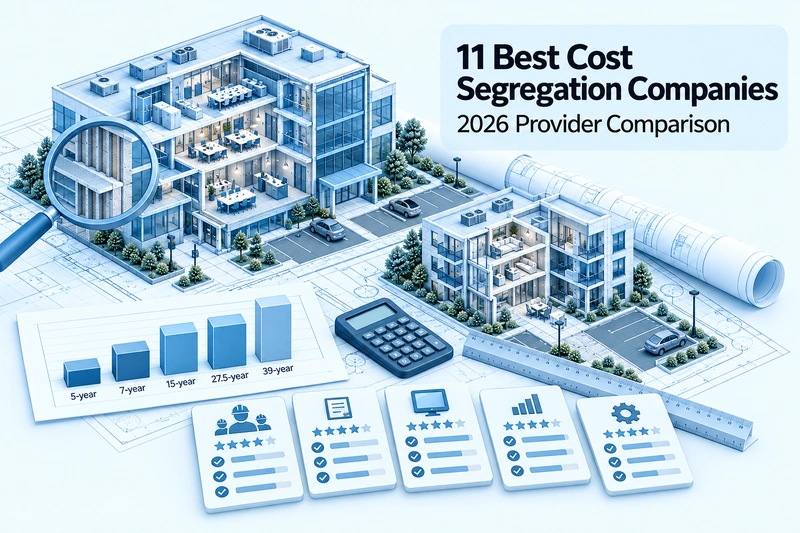
Instead of treating the entire property as one 27.5-year asset, a study breaks it down into components with shorter MACRS recovery periods, typically 5, 7, or 15 years. For STR owners, this often includes:
- Furniture and decor (beds, dining sets, wall art)
- Appliances and electronics (refrigerators, washers, TVs, smart thermostats)
- Carpet and other removable flooring (built-in cabinets and countertops are generally structural components, depreciated with the building)
- Outdoor amenities (decks, fencing, landscaping, pools, and lighting, generally 15-year land improvements)
Each of these can be depreciated much sooner than the building itself. And under the One Big Beautiful Bill Act, 100% bonus depreciation was made permanent for qualifying property both acquired and placed in service after January 19, 2025, as set out in the Treasury and IRS guidance implementing the new rule. Two important caveats:
- Property under a written binding contract entered into before January 20, 2025 is treated as acquired on the contract date and generally remains on the prior phase-down schedule at the rate for its placed-in-service year: 40% in 2025, 20% in 2026, and 0% in 2027 and after.
- Property placed in service between January 1, 2025 and January 19, 2025 also stays at 40%.
When those gates are cleared, the result can be a substantial first-year reduction in taxable income, subject to the loss-limitation rules discussed below, and more liquidity for reinvestment, upgrades, or new acquisitions.
Why Short-Term Rentals Are Strong Candidates
Short-term rentals sit at an interesting intersection of residential and commercial real estate, and the building's recovery period is the first thing to settle. Under IRC §168(e)(2)(A)(ii), residential rental property excludes a unit in a hotel, motel, or other establishment more than half of whose units are used on a transient basis, and "transient" means stays of less than 30 days (Reg. §1.167(k)-3(c)). For a whole house or condo run as a nightly rental, including most Airbnb and VRBO properties, the unit is the establishment and its use is transient, so 39-year nonresidential treatment is the conservative reading. Substantial services are not the test. Confirm the classification with your CPA, and note that it changes only the shell: the 5-, 7-, and 15-year property a study identifies is the same either way.
What makes most STRs strong cost-segregation candidates:
- High-amenity environments. Luxury finishes, appliances, and outdoor spaces increase the proportion of short-life property.
- Frequent turnover and updates. Hosts replace furniture and decor often to maintain appeal, which creates additional opportunities for accelerated depreciation.
- Multiple property acquisitions. Investors who scale portfolios quickly can compound the benefit of first-year deductions across properties.
- Potential non-passive treatment. If the property's average period of customer use is seven days or less, it is excluded from the definition of a "rental activity" under Treas. Reg. §1.469-1T(e)(3)(ii)(A). If the owner then materially participates under §469(h) (any one of the seven tests in Temp. Reg. §1.469-5T), the activity is non-passive and losses can offset W-2 and other active income. This is what most people call the STR loophole.
The STR loophole is grounded in Treas. Reg. §1.469-1T(e)(3)(ii)(A), the "seven-day average customer use" rule, not in IRC §469(c)(7), which is the separate Real Estate Professional (REP) exception. The two frameworks are routinely confused but are legally distinct: REP under §469(c)(7) requires the 750-hour and >50% personal-services tests across all real property trades or businesses; the STR exception simply removes the activity from "rental activity" status, after which ordinary §469(h) material-participation rules apply.
There is a second route in the same regulation: an average period of customer use of 30 days or less combined with significant personal services also takes the activity out of "rental" status under Reg. §1.469-1T(e)(3)(ii)(B).
In practice, most hosts clear material participation through test 3: more than 100 hours of participation, and not less than any other individual. Cleaners, co-hosts, and property managers all count as other individuals, so contemporaneous time logs matter.
One trap worth naming: if you clear the seven-day test but fail material participation, the activity is passive and still not a rental activity, so the $25,000 active-participation allowance is unavailable too.
A Look at the Numbers: Turning Depreciation Into Cash Flow
Suppose you purchase a $900,000 short-term rental, a high-end cabin near a national park. After excluding land value, the depreciable basis is $800,000.
A representative cost segregation study might find:
- 5- and 7-year property: $180,000 (furniture, appliances, lighting, finishes)
- 15-year land improvements: $60,000 (parking, decks, landscaping)
- Building shell (27.5- or 39-year, depending on the classification above): $560,000
Assuming the property meets the OBBBA acquisition and placed-in-service rules, the $180,000 + $60,000 = $240,000 of short-life property is eligible for 100% bonus depreciation in year one. The remaining $560,000 of building shell still generates a first partial-year MACRS deduction (roughly $10,000–$20,000 depending on placed-in-service month), which is on top of the bonus amount.
At a 32% combined federal/state marginal rate, the $240,000 bonus deduction could translate to up to ~$76,800 in first-year tax savings, if the deduction is fully usable. That "if" matters. The actual benefit depends on:
- Whether the activity is non-passive (STR loophole or REP), so losses can offset active income;
- §465 at-risk limitations;
- §163(j) business interest limitations;
- §461(l) excess business loss limitations for non-corporate taxpayers (made permanent by OBBBA), which cap net business losses used against wages and investment income at $256,000 single / $512,000 joint for 2026 and defer the unused portion to a future NOL.
Personal use can wipe the loss out entirely. Under §280A, if your personal use of the property exceeds the greater of 14 days or 10% of the days it is rented at a fair rental price, the property is treated as a residence and deductions are limited to rental income, with depreciation allowed last. No loss is permitted at all, no matter what a cost segregation study finds. Personal-use days also work against your material-participation hours and your average-stay calculation, so a vacation rental you actually vacation in needs careful modeling before you commission a study.
Where the deduction is fully usable, the cash savings can fund another down payment, cover renovations, or offset seasonal cash flow swings. Across several STRs, the compounding effect is why many serious hosts treat cost segregation as part of their acquisition strategy. Where the deduction is limited, it isn't lost; it carries forward, but the cash-flow timing changes.
Don't Forget About Recapture
Accelerated depreciation isn't free money. On disposition, a portion of the deductions you've taken comes back as depreciation recapture:
- §1245 recapture on personal property (the 5- and 7-year items) is taxed at ordinary income rates up to the amount of depreciation taken.
- 15-year land improvements are §1250 property, but §1250 recaptures depreciation in excess of straight-line as ordinary income, and with 100% bonus nearly all of it is excess. Only the straight-line portion escapes ordinary treatment.
- Unrecaptured §1250 gain, taxed at up to 25%, therefore applies to the building shell and to the straight-line slice of the land improvements.
For STR investors who plan to hold long-term, recapture is a deferred cost that's usually worth the time-value-of-money trade. For those planning to sell soon, a §1031 like-kind exchange can defer the §1250 gain, though not necessarily the §1245 recapture on furniture and appliances: personal property is no longer like-kind, so §1245 recapture is triggered to the extent the replacement property does not include §1245 property. Careful modeling can also identify the optimal hold period. Either way, recapture should be part of the conversation before you commission a study, not a surprise at closing.
Common Missteps and Missed Opportunities
Despite the potential, many hosts leave money on the table. We routinely see returns where even savvy investors skipped cost segregation because their CPA assumed it didn't apply to "residential" properties. The most common pitfalls:
- Treating all assets as 27.5-year property. This blanket approach ignores the unique mix of short-life items in STRs.
- Not separating land improvements. Outdoor amenities like fire pits, fencing, or driveways often qualify for 15-year depreciation under MACRS asset class 00.3.
- Failing to coordinate with tax professionals. Accelerated deductions only deliver cash benefits when they pass the §469, §465, and §461(l) tests, especially if you're claiming Real Estate Professional Status or relying on the STR seven-day rule.
- Using generic, undocumented studies. The IRS Cost Segregation ATG favors detailed engineering-based methodologies with documented asset-level support. Generic, purely software-based estimates that lack engineering documentation are less defensible under that guide, though defensibility ultimately depends on the quality of documentation, not on whether software is involved.
- Overlooking retroactive look-back studies. Even if you've owned the property for years, you can capture missed depreciation in the current year using Form 3115 and an IRC §481(a) adjustment, without amending prior returns. The procedure is set out in Rev. Proc. 2015-13, with the change listed as automatic change number 7 in Rev. Proc. 2025-23. The two-return rule decides the path: if only one return has been filed on the old method, amend it; Form 3115 applies once two or more have been filed. The catch-up is computed at the bonus rate in effect for the year the property was originally placed in service, not today's 100%.
Avoiding these errors helps ensure your deductions are both maximized and defensible.
Preparing for a Study: What STR Owners Should Gather
If you're ready to commission a cost segregation study, preparation makes a big difference. STRs often involve numerous capital improvements, so thorough documentation supports stronger reclassification.
Here's what to have on hand:
- Purchase documents (HUD/closing statements and appraisals)
- Renovation invoices and contractor breakdowns
- Furniture and appliance receipts
- Photos or inventories of interior and exterior upgrades
- Architectural or design plans, if available
With these details, your study team can accurately assign costs to shorter tax lives, and document those assignments to the standard the IRS ATG expects.
How Depreciation Strategy Fits Into STR Growth
For many investors, short-term rentals start as a side business and evolve into a serious portfolio. Cost segregation can accelerate that growth. By front-loading deductions, it creates liquidity that can fund expansion without adding debt, to the extent the deductions are usable in the year taken.
It's also a useful tool for smoothing seasonal volatility. STR cash flow often swings with occupancy trends, and accelerated depreciation can cushion those swings by reducing taxable income in high-revenue years.
When paired with a sound tax plan, especially if you qualify as a real estate professional or your STRs satisfy the seven-day rule plus material participation, this strategy can compound: more after-tax cash flow, faster capital recovery, and a stronger balance sheet heading into your next acquisition. Just remember that the OBBBA's 100% bonus is permanent only as a matter of current statute; future Congresses can change it.
Turning Tax Efficiency Into a Competitive Edge
In the short-term rental space, success isn't just about location or design; it's about operational efficiency, and tax strategy is part of that equation.
Used correctly, cost segregation transforms how hosts view property ownership. It converts depreciation from a passive accounting entry into an active cash-management tool, subject, as always, to the loss-limitation rules and the eventual recapture math.
That's what we tell every STR investor: the numbers don't lie, but they also don't tell the whole story without the rule set around them. Whether you're managing a single cabin or a multi-state portfolio, the tax code offers real opportunity if you know where to look, and where to be careful.
If you're exploring cost segregation for short-term rentals, get a free proposal from R.E. Cost Seg, our team can help ensure those opportunities are captured precisely and defensibly. Our engineering-based studies and tax expertise help hosts and investors translate depreciation into immediate, meaningful savings, within the framework the IRS, the Code, and the regulations actually require.